Thursday, November 22, 2012

Big Bang in merchandising Bonanza

Big bang theory logoAs a trained physicist one of this bloggers favourite TV programmes is the US sitcom "The Big Bang Theory". He's not very keen on dubbed German version and was pleased to find that the original language versions are now available on iTunes. Somehow Sheldon Cooper does not seem to come over well in German - even if the long words in that language would seem to be perfect for Sheldon to stupefy everyone else. Apparently the show has ratings of over 500,000 in the UK and is credited with the mini-boom in school students studying physics. Just shows that nerds can be role models. It seems strange, nonetheless, that the show is apparently expected to generate USD 50 million in merchandising revenue this year, according to this report in the US magazine Variety. Apparently you can now buy a model Sheldon Cooper as well as a Gazinga T-shirt (Gazinga being Sheldon's way of indicating a joke). It's probably not surprising given the nerdy nature of the show that it features a fact or fiction trivia game (obviously not licensed to the makers of Tr*v**l P*rs**t, given its name). And I'm really looking forward to a good game of Big Bang UNO with the kids. Big bang sheldon dollGiven this volume of merchandising for the show alone, it would be intriguing to find out just how much benefit the makers of the nerdy products plugged on the show enjoy. There's no reference on the German TV version to sponsored product placement and so it might really be that DC comics enjoy substantial extra publicity for their iconic superheroes. On an intriguing note - despite the merchandising campaign, the makers of the show don't seem to be thinking proactively about their trade mark rights. US Trademark 3754655 was only filed in 2009, despite the show having been on air much earlier, and it is only registered in class 41 for entertainment services. Outside of the US no rights seemed to have been filed.

Technorati Tags: ,

Monday, November 19, 2012

Kodak, Patents and the Deal That You Can't Refuse?

Let's start from the end: No, I am not going to let this subject disappear quietly.

Several months ago I wrote about "Patent Valuation, T.S. Eliot and the Theatre of the Absurd" here, where I commented on the steadily decreasing valuation of the Kodak patent portfolio. The saga continues. Last week it was reported by Joe Mullin on arstechnica.com here that Kodak has entered into a credit line of $793 million dollars with its bondholders, provided that the company can raise at least $500 million from the sale of its portfolio of patents. The arrangement still needs approval of the bankruptcy court, it is reported.

The names of potential purchasers remain a combination of smartphone companies--such as Apple, Google and Samsung-- on the one hand, and patent aggregators, such as Intellectual Ventures here and RPX Corp. here, on the other. The article goes on to make a number of points that are not entirely clear to me:
1. "Because such a wide range of entities is working together to buy these Kodak patents, it is unlikely that they would fall into the hands of patent trolls or be used for other types of patent attacks."--I don't quite follow this. What does it mean that these entities are "working together"? Are they allocating the patents between them? If not, what is the nature of this coordination? Moreover, depending upon on how you define a patent troll, both Intellectual Ventures and even RPX Corp can be seen as having troll-like characteristics.

2. "This deal would allow Kodak to get one big lump-sum payment rather than eke out its patent cash in court."--This seems to be a bit of false dichotomy. Did anyone really believe that Kodak's patent folio was going to earn the company aggregate recovery in the amount of many hundreds of millions of dollars? Is sale of the patent portfolio really a commercial alternative to continuing to slog it out in courts?

3. "But the endgame will remain the same: competing companies--and, indirectly, consumers--will still have to pay a hefty tax to buy out a dying, but patent-rich, business"--This is not clear to me at all. Who are the competing companies and why are they paying "a hefty tax" for the patents?

4. I do not understand the pricing dynamic that it taking place here. In particular,
what are the pressures that are being brought to bear on these potential purchasers so that they agree to pay an amount greater than if there was a free auction of the portfolio? What comes to mind is that the bondholders want to pressure the perspective purchasers to fork over at least a half-billion dollars or take the risk that the patents fall into the "wrong" hands. Maybe that is the "hefty tax" that is referred to in the article.
More generally, I would really love someone to dig into how it came to pass that the same patent portfolio was given a valuation of over two billion dollars last year. Who had in interest in championing this over-estimate? How was this supposed to translate into fees or other income for interested parties? Is there an IP equivalent here to the tawdry conduct of several major investment houses a half decade ago, who were flogging investments of the same bundles of assets that they were shorting (i.e., betting on their price decline)?

Stated otherwise, it seems to me that the time has come for at least certain elements of the patent valuation business to come clean on what happened. Greed, misjudgment, or something more sinister?

Friday, November 16, 2012

Ceres Power - An expert's assessment

A recent announcement from Ceres Power plc, previously discussed here, noted that:

“… the Company has continued to explore various strategic options and these discussions are on-going. In the event, the Company is not able to progress any proposals to a successful conclusion, it will as previously announced commence an orderly wind down of the business.”

The company had previously announced the commissioning of an independent assessment of its fuel cell technology by a respected expert.  An executive summary of the assessment, published in September 2012, concluded that:

“Ceres Power SOFC technology is highly differentiated and has the potential for cost leadership in mass manufacturing of cells and stacks, with performance and durability meeting the requirements of volume applications such as residential CHP. The Company has intellectual property rights and trade secrets which provide considerable protection against emergence of competition.”

and that:

“Patents and know-how covering laser drilled foil substrate, cell configuration, stack design, manufacturing procedures and conditions provide significant protection against competition.”

Tuesday, November 13, 2012

Entrepreneurship and Innovation: When IP Does Not Seem to Matter

I am a big believer in "narrative". What I mean by "narrative" is the overarching framework of discourse that characterizes discussion about a given topic. Against that backdrop, I have been arguing, both in writing and in talks, that the rise of social media has brought in its wake a material decline in IP as part of the narrative on entrepreneurship and innovation. I have recently had two acute reminders of just how far IP has dropped out of this narrative.

The first reminder was in connection with a university programme on entrepreneurship for which I serve as a consultant. The purpose of the programme is to create an environment for the rapid fostering of start-ups. The programme has attracted international attention due to the number of successful exits that it has spawned. The downside to this obsession with quick exits is that the overwhelming number of start-ups are in the gaming and social media space, with students perceiving lower barriers to entry and where there exists a greater possibility of attracting a willing buyer at an early stage.

In that connection, I have for a number of years given an overview lecture of IP from the commercial perspective. Typically, following the lecture and running throughout the one year of the formal programme, several of the start-up groups consult with me about various IP aspects of their proposed ventures. I had noticed, however, that the number of such student inquiries has been steadily decreasing. How far IP had fallen was made clear following my recent lecture to the current intake.

I came away from the lecture thinking that the session had successfully introduced IP into the students' entrepreneurship narrative. Oh my, how wrong I was! The feedback was quick in coming and it was a stunner. "We found the topic to be totally irrelevant" was the view of most of the budding entrepreneurs in the class. IP was simply of no interest, not specifically to the various start-up projects and not more generally as part of the preferred intellectual arsenal of the young entrepreneurs. What the students want to learn about are issues of privacy, database protection and methods of online collection and payment. Whether I am the person best equipped to lecture on these topics remains an open question.

The second reminder arose in connection with a lengthy survey article-- "A Sense of Place: Technology and Geography", which appeared in the Oct. 27th issue of The Economist here. The focus of the article was to counter that view (promoted by The Economist itself in the 1990s) that digital and telephonic developments would result in the "death of distance." Au contraire--"Geography matters as much as ever, despite the digital revolution", says Patrick Lane, the author of the survey.

The first example brought in the article is a ride-sharing service in operation in San Francisco (where else?) whereby individual drivers "rent out" seats in their car, giving the owner of the service a 20% cut. The service works through a smartphone app, which effectively brings together a willing passenger and willing driver. The service is still dealing with issues of regulation and licensing. Participating drivers are identified by a pink-colored moustache on the front of the car, which is the trade mark for the service.

Try as I might, I could find no other discussion of intellectual property in the article, not in connection with the seat-rental service and not more generally in connection with other goods and services described. In describing entrepreneurial endeavours in the area of how technology is exploiting geographic proximity, IP is once again absent from the narrative.

With all of the media attention being devoted to the patent disputes involving the likes of Apple, Samsung, Google and HTC, the two instances described above are a useful and instructive antidote. Heavyweight patent cases make great theatre, but they do not reflect what is going on beneath the surface. At the level, the narrative of innovation and entrepreneurship is more and more uncoupling itself from traditional categories of IP.

Suppose no-one want to watch ...

The advertisement below arrived in my email inbox earlier today.  Reading it, I found myself pondering over the apparently unstoppable one-way flow of movies from the United States to Europe. We have heard much discussion in recent times about the incentives which copyright provides in order to safeguard the investment which is incurred in the production of relatively high-cost products.  If such an incentive exists, what are the factors that cause investment to be made so much more successfully in US-made movies than in European ones?  European copyright law is surely no weaker than its American counterpart in all relevant respects and there is now a supposedly single market for cultural products within the EU, which has a population of around twice the size of that of the US.

So what is the reason why Europe buys US films but gets so few of its own distributed across the Pond?

Theatrical export of European Films in 2010

A sample analysis of the distribution of European films in 10 non-European markets

46Pages, print edition € 29, pdf edition € 35
Available now!
  
Dear Sir or Madam,

For the first time, the European Audiovisual Observatory has analysed the relative fortunes of European films released outside the EU. The report analyses the success of European films released in 10 major non-European markets as tracked by Rentrak Corporation, the international leading reference source on box office and admission.

Key points:
  • Only 103 European films had a theatrical commercial release outside of Europe in 2010.
  • The main non-European foreign markets represent about 18% of the world admissions for European films.
  • Outside of Europe, European films accounted in 2010 for around 3% of the total admissions, while their market share in Europe was 26%.
‘Theatrical Export of European Films in 2010’ is available as a hard copy and pdf-version.

Don’t hesitate to contact us if you need any further information! ...

Apple Clocks now run to time - and how to make USD 21 Million

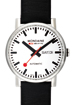
Swiss Railway TrainIt's well known that swiss trains run to time - and it's good to see that Apple's iOS Operating System is using the image of the iconic Swiss railway clock on the screen. Unfortunately Apple seem to have forgotten to check the trade mark rights on the image in Switzerland which has now lead to around CHF 20 Million being paid in a one-off licence fee, according to Swiss Daily Tagesanzeiger. Given the popularity of Swiss railways (8,585 US billion kilometres travelled in the first half of 2012), this is not really going to reduce the fares in Switzerland. It's however a nice little present in the run-up to Christmas and a reminder to all Apple fans as to how well trains run in Switzerland. Presumably, however, the Mondaine watch company is not madly happy about the deal. They've been producing the "Offical Swiss Railway" watches under licence to Swiss railways for a number of years.Swiss Railway Watch Further information (in English) at the following link.
Monday, November 5, 2012

Funding for patent litigation: a new solution?

How do you finance both the fixed costs and the contingent expenses incurred in the course of patent litigation?  This has long been recognised as a threshold question which, if not successfully answered at an early stage, will usually result in one of two outcomes: either the claimant will decide not to commence proceedings because the prospect of an unsuccessful outcome is unaffordable, or the defendant will not put in a defence since the cost of defeat (and not infrequently even the cost of victory) is not worth risking.  It is therefore with great interest that this blogger read the press release, reproduced below, relating to what is claimed to be the first "turnkey" funding solution for patent owners, at any rate.  The level of interest rose when he saw that his friend and colleague, Olswang LLP colleague Campbell Forsyth, has been playing an active part in its development.

The press release reads thus:
HLP Integration launches the ‘HLP3’ patent litigation funding solution  
The first integrated solution for monetizing patents offered in Europe 
 Leading US litigation support consulting and services company HLP Integration has come together with commercial litigation funder Caprica; ATE [that's "after the event"] risk assessors Thomas Miller; and Olswang LLP  to create the first ever turnkey solution for IP owners seeking to generate revenues from their patents.  
Suitable patents admitted to HLP3 will undergo a robust and thorough process of analysis, expert review and risk assessment involving exhaustive research carried out by HLP; evaluation by Olswang LLP; and a further risk evaluation by ATE risk assessors. Subscribing patent owners will have the benefit of an option, for qualifying patents, to obtain funding from Caprica to take a patent case to court.  
Funding commercial cases in the UK has grown significantly in recent years. Potential litigants seeking funding are normally required to undertake considerable preparatory work in order for their case to be reviewed by funders. This can be very time consuming and costly.  Patent cases are also technically complex and therefore require access to specialist expertise at every stage leading to evaluation by a funder.  
HLP3 is a process designed to allow a patent owner or licensee access to a detailed due diligence report provided by industry leaders at the least possible outlay and risk.  The fact that the HLP3 process is integrated ensures the time involved from commencement of the patent review to clarity as to whether a patent can be successfully litigated is as short as practicably possible ...” 
The idea of an integrated multidisciplinary approach is attractive and recognises that far more is needed than pots of money, nerves of steel and a bit of actuarial nous.  The question which most interests this blogger is whether, in reverse mode, the same due diligence-driven approach can be applied to the funding of non-patent-owning litigants too, based on an assessment of the extent to which an allegedly infringing product or process is firmly based upon expired patents, information and technology in the public domain and that vague concept which is so often aired in court, "general knowledge".
Anyone wanting further information about HLP3 should email Peter Rouse at peter.rouse@hlpintegration.com or give him a call on +44 7737 128174.